Considering the weekend was dark, rainy, and gray, I thought I would write about the sun. The sun is very important to a Dane, and they will often do as much as they can to obtain it. I remember when I first arrived in Denmark - it was the end of the summer here - and the Danes were very social as they basked in the sun and spent most of their time outside. It's a much different story now. The lack of sun keeps most of my architecture classmates in the studio for most of the day, and since it gets dark around 3:30 everyday, the only time to enjoy the sun (if there is any) is during our bike to school or lunch.
Coming as they do from a cold northern climate, it is no surprise that sunny, warm destinations are a favorite among vacationing Danes. Every summer Danish cars towing trailers and camping vehicles can be seen crossing the borders like herds of migrating wildebeest in search of sunnier climes to the south. During the winter vacations travel agents do a brisk trade, sending Danes off to more exotic destinations in their quest for some winter sun. Skiing vacations are also popular, particularly in Sweden, France, and Austria.
21 November 2010

20 November 2010
Tipping
The minimum wage ensures that nobody has to rely on tips to make a living, and tipping is neither usual nor expected. Most bars, restaurants, and cafes add a service charge of 15 percent. Danes therefore only tip waiting and hotel staff if the service has been particularly good. If you feel that the service deserves it, then a tip in the region of 10-15 percent of the final bill would be appropriate, or you could simply round up the check.
19 November 2010
Venice "Get Lost" Exhibition
As part of our trip to Venice, an afternoon was spent getting lost. All 5 groups started within 1.4 km different radius of Piazza San Marco, with the goal to get lost and find our way to one of Europe's most prominent and important public spaces. Today, a small exhibition in Department 1 showcases our different routes of travel - and highlights photographs taken along the way to represent the global and local labyrinth.


Read my 2 November blog post to learn more about my journey to Venice and to view my movie including more photography and a time-lapse of getting lost!
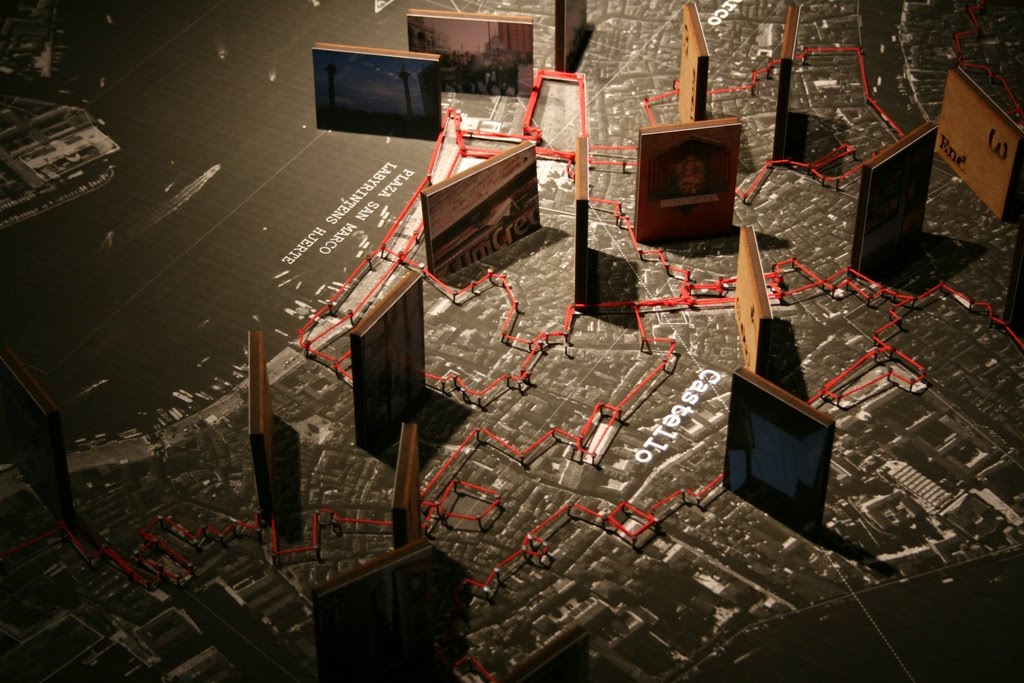


Read my 2 November blog post to learn more about my journey to Venice and to view my movie including more photography and a time-lapse of getting lost!
18 November 2010


17 November 2010
Tisvilde Hegn
Tisvilde Hegn is a coniferous forest about an hour drive west of Copenhagen that represents both production and natural forest ecosystems., Recently, I have been experimenting in black and white on my camera, as our assignment is to only use those two colors throughout the entire semester. The limitation has proved to be the beauty of the project so far - forcing me to thinking about contrast, representation, and hue quality throughout design. The forest documentation is phase 2 of our semester project, encouraging us to first document and understand existing forest types in Denmark before applying vegetation to our site.


"If the tongue had not been framed for articulation, man would still be a beast in the forest." - Ralph Waldo Emerson


"If the tongue had not been framed for articulation, man would still be a beast in the forest." - Ralph Waldo Emerson
16 November 2010
Lousiana Museum of Modern Art - Anselm Kiefer
After hiking and doing a thorough inventory of the Tisvilde Hegn coniferous forest in North Zealand - Jens, Martin, Sara, Gladys and I stopped by the Louisana Museum of Modern Art (Read 10 September blog for my first visit to Louisana.) I am so grateful we did. Free entrance to all museums in Denmark is just one of the many perks of going the Royal Danish Academy of Fine Arts, School of Architecture! Anyways, the current exhibition is that of Anselm Kiefer. Born in 1945, Kiefer is a German painter and sculptor that works with straw, ash, clay, lead and shellac as a material palette. The poems of Paul Celan have played a role in developing Kiefer’s themes of German history and the horror of the Holocaust. Most of his paintings were visually representative of landscape, but the meaning behind them was more social and political in nature. I am attracted to this sort of abstract painting, and I love the aggressiveness put into gestural drawings of this kind.
 Anselm Kiefer, Nigredo,1984, Oil, acrylic, emulsion, shellac, and straw on photograph, mounted on canvas, with woodcut. Picture from here.
See more pictures of my hike through the Tisvilde Hegn coniferous forest in tomorrow's blog.
 Anselm Kiefer, Nigredo,1984, Oil, acrylic, emulsion, shellac, and straw on photograph, mounted on canvas, with woodcut. Picture from here.
See more pictures of my hike through the Tisvilde Hegn coniferous forest in tomorrow's blog.
15 November 2010
Grocery Shopping in Copenhagen
When I first arrived in Denmark I was a little skeptical in my search for finding a legit grocery store. One of my biggest problems has been finding good sources of protein, but I think I have finally found a good store close by - Fotex. The store has been giving me good quality at a comparable price to the everyday smaller stores like Netto and Aldi.

I’ll make sure to upload a video soon of me shopping in a grocery store, it will be quite entertaining. Anyways, Danes like value for their money, and this is reflected in their shopping habits. Most people do their shopping a the budget supermarkets, the largest of which are the Netto chain and the German-owned Aldi chain. Both of these chains have a no-frills, value-for-money approach to the sale of foodstuffs. Service is minimal to keep down overhead and thereby, prices. The upper end of the market would be represented by the Irma and Iso chain stores, but fewer Danes use them for shopping on a daily basis, preferring to use them for the purchase of luxury goods. Service in the Danish supermarkets is in general below the standards of the U.S.A., due to the high cost of wages and the need to keep overhead down in a competitive market.
Shopping hours are controlled by legislation. Store hours are Monday to Thursday from 9:00 a.m. to 6 p.m., Friday from 10:00 a.m. to 8:00 p.m., and Saturday from 9:00 a.m. to 1 p.m. Shops are open longer on the first Saturday of every month, from 9:00 a.m. to 5:00 p.m. Store hours are gradually being extended, but it is a slow process as the legislation is to be updated.
The most recent change has been the easing of restrictions on Sunday hours, with shops now allowed to be open on a limited number of Sundays during the year - usually the first Sunday of each month. The hours of operation really proposed a problem, considering when I usually wake up on Saturdays the shops are closed, and on most Sundays of the month they are closed as well. It has required me to do much proper planning.
Skål!
Subscribe to:
Posts (Atom)